
WHISK(E)Y
WHISKEY
Uisge beatha (pronounced ‘ooshky-bay’): Gaelic term meaning ‘water of life’
Mankind had to figure out agriculture before we had bread, and then it was many centuries before we started converting excess grain into alcohol via fermentation. This gave us ‘beer’, but it wasn’t until a historical ‘accident’ that the production of distilled beverages (aka ‘fire water’) got into the hands of the working class: The notorious King Henry VIII, furious that the Pope wouldn’t allow a divorce from his first wife Catherine, separated the Roman Catholic Church from the Church of England in 1534 and banished the monks from their monasteries. In doing so, the once-secret knowledge of distilling became commonplace - to the point where it became a regular part of farmyard operations throughout the land. For the next couple centuries, people were tinkering with stills to make them bigger, better, and more efficient - and ‘whiskey’ evolved from an agricultural bi-product to a hugely popular elixir traded around the New World.
While whiskey is by definition a grain-based spirit aged in an oak barrel, there are several varying traditions based in contrasting geographical regions - each with its own unique story and production method. Whiskeys are also distinguished by the grain (barley, wheat, corn, rye), the water quality, and the still. The bottom line, however, is the barrel: that’s where each and every whiskey gets most of its flavor.
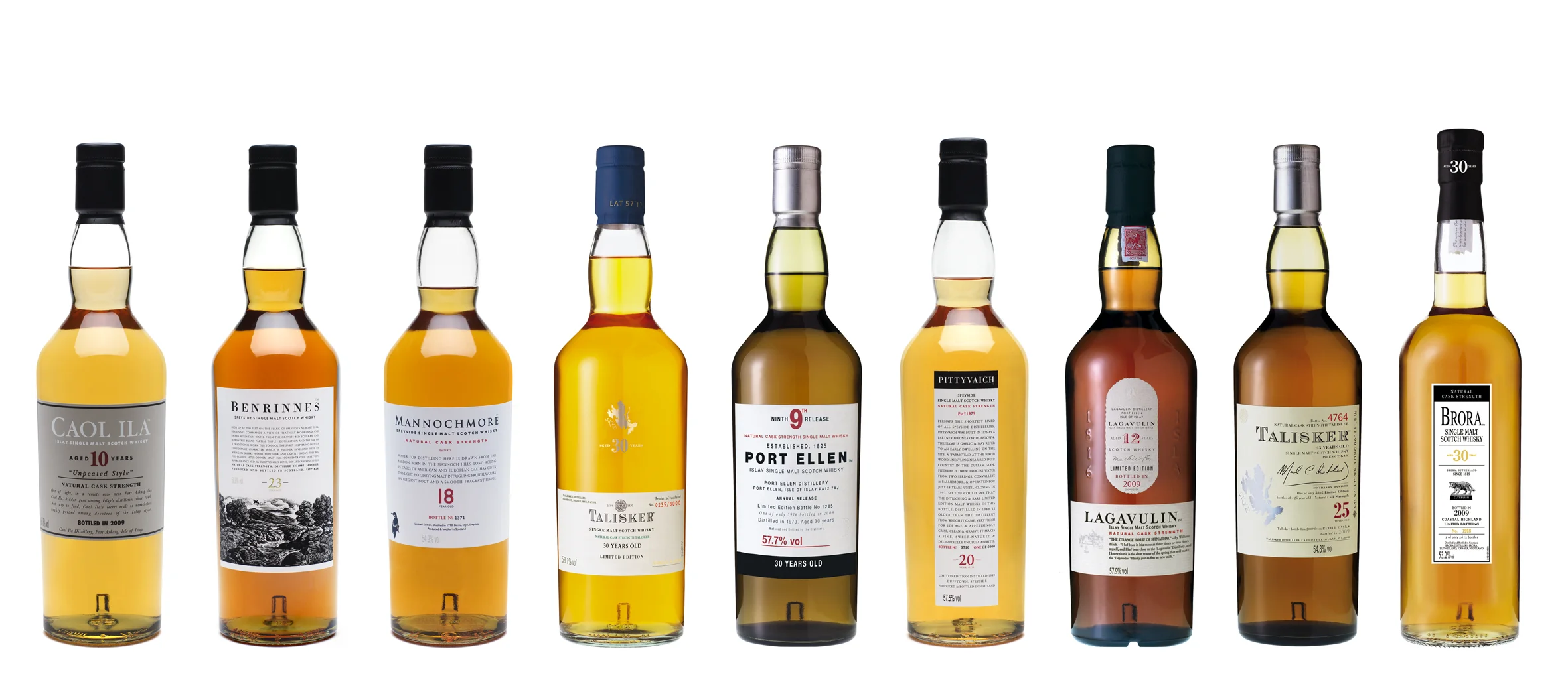
SCOTCH
Whiskey made in the Scotch tradition is mostly (still) malted barley, although some producers will have corn and/or wheat as their base or in their blend. Many distilleries on the Islays use a decomposed mass of moss called ‘peat’ to fire up their stills - as wood and coal were scarce commodities and often too expensive for a family to import for this purpose. This is what often gives that unique ‘smokey’ quality to many Scotches. The vast majority of Scotches are blends, but there are also single malts, single grains, and blended malts. Scotch must be aged a minimum of 3 years, typically in barrels that are re-purposed from their previous lives as Bourbon, sherry, port, or madeira barrels. In blends, the youngest cask is always noted on the bottle. While many brands around the world have imitated the production of whiskey in the Scotch tradition, only those who produce their whiskey in Scotland can put the term ‘Scotch’ on their bottle.
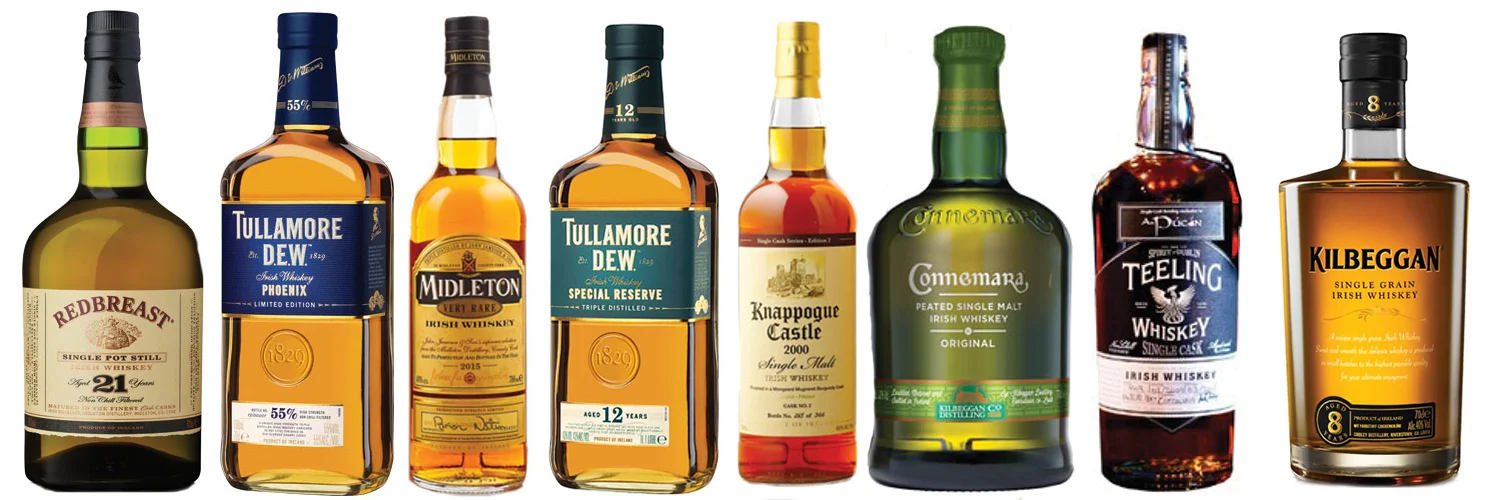
IRISH
It was Dubliner Aenaes Coffey that patented the most recognized modern version of a continuous still, and yet - perhaps partially because of his reputation as an excisor in the city - the Irish were among the last to adopt the new technology, holding true to the bulbous pot stills that require a second distillation, and are therefore less efficient. At one point, Irish whiskey was on the verge of a complete disappearance when a Scottish company bought up a large number of small Irish distilleries for the simple purpose of shutting them down. Yet, amazingly, their stubborn adherence to tradition eventually became its staple: the blending of distillates from both column and pot stills which gives Irish whiskey its lighter, sweeter character that many sippers specifically seek out. Like the product of its neighbor, Irish whiskey must be aged a minimum of 3 years and must be made in Ireland to print the name on its bottle. Most are also typically aged in cast-off bourbon casks, but there are some aged in sherry, wine, or port barrels as well.
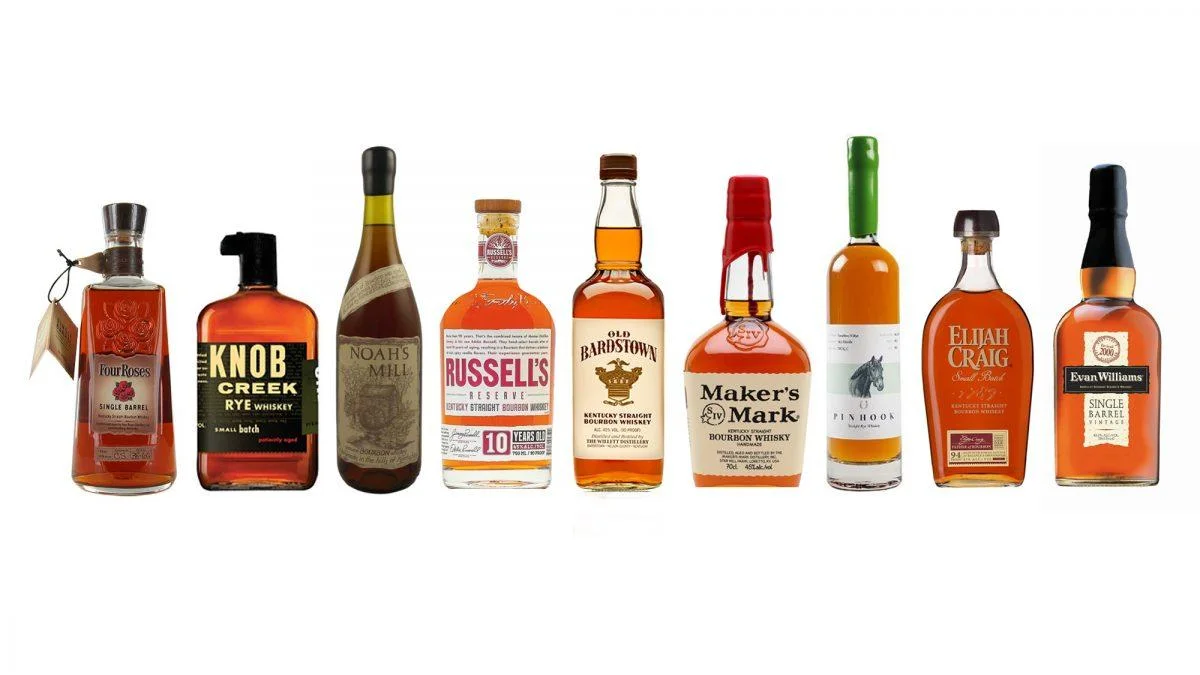
BOURBON
The American tradition of whiskey owes a great deal to Native Americans - who introduced settlers to corn. Bourbon County, Kentucky was one such place where farmers could grow a bounty of corn - and thus many barrels arriving to port in places such as New York or New Orleans would have a ‘Bourbon’ stamp on them. It’s the nickname that stuck. When Prohibition ended in 1933, Americans hoped to distinguish their product from Scotch and Irish whiskies by setting their methods to precedent: all Bourbon must be aged in a new, charred American (white) oak barrel from a base of at least 51% corn. Barley, wheat, and/or rye can also be in the mix, and often are. There is no minimum age requirement for Bourbon, but most are in the barrel for at least two years. The vast majority of Bourbons are blended, but even large brands such as Buffalo Trace issue single-barrel and small-batch blends.
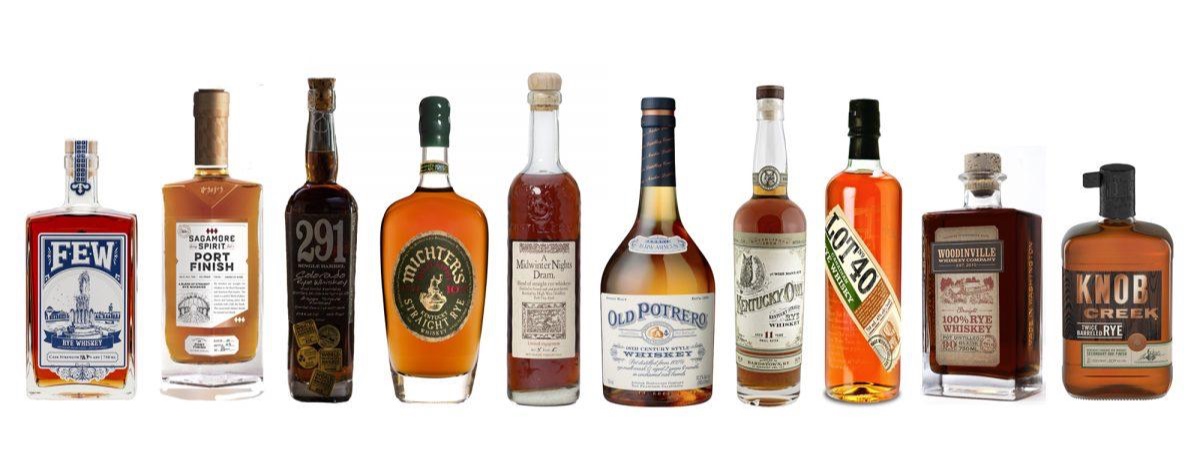
RYE
Another North American creation, this spirit mostly came out of farms in the northern regions (including Canada) where the cold-season crop flourishes. It distinguishes itself from Bourbon in that it is always at least 51% rye, but it is also aged a minimum of 2 years in newly charred American oak barrels.
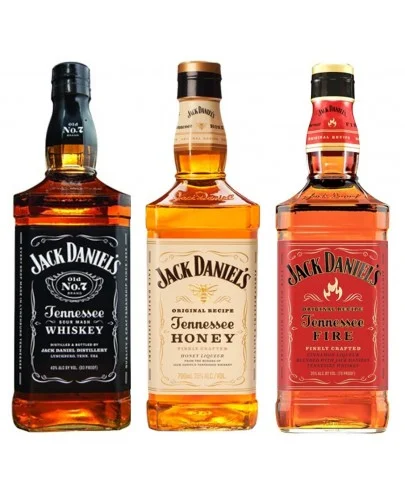
TENNESSEE SOUR MASH
This tradition is mostly distinguished from bourbon by the filtering through chunks of maple charcoal (known as ‘The Lincoln County Process’), which occurs before barrel-aging. This doesn’t add any sweetness, but instead removes some of the heavier congeners - which can mellow the flavor of the spirit before it is placed in the barrel. Most sour mashes are at least 80% corn, which is where that reputation for sweetness comes from. The state that is home to the country’s largest whiskey producer was also the first to adopt Prohibition law, and remains a stronghold of the ‘Bible Belt’, so it is only very recently that the economic boon from the few distilleries that remained in Tennessee finally gave way to the opening of whiskey production in 41 additional counties.
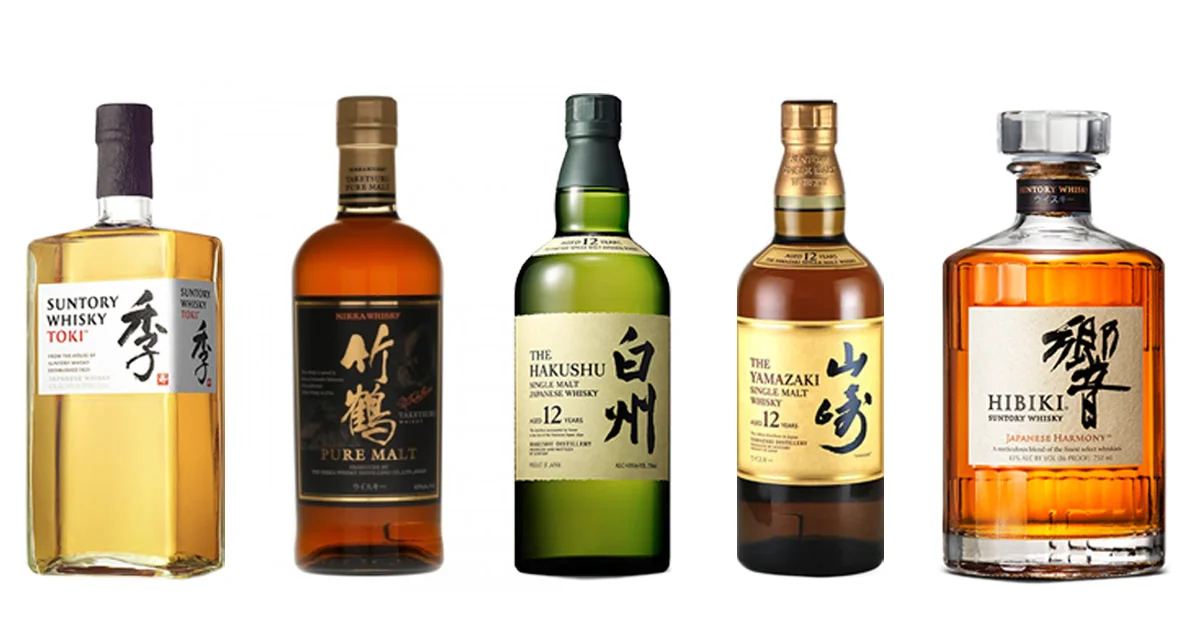
JAPANESE WHISKEY
During Prohibition in the United States, one Japanese entrepreneur poured his significant knowledge from his travels through Scotland into his own distillery. Yamazaki, the first distillery built in Japan, opened in 1923. Suntory, the company who owns the distillery, utilizes an array of techniques, casks, and even barleys to manufacture unique spirits that have come to not only distinguish the Japanese blends from others but expand the very idea of what ‘whisky’ can be.
TASTING WHISKEY
As usual, the best way to find flavor and identify differences is to put several whiskeys next to each other. If you taste a Scotch next to a bourbon, or a bourbon next to a Canadian, or an Irish next to a Scotch, it's a heck of a lot easier to figure out how they differ than if you just drink one at a time and wonder.
So we'll try it in our instructive flight. And once you've settled on those differences, put a few island whiskies next to some inland whiskies. Or place a higher-proof single barrel bourbon up against a more common whiskey and see what makes each one tick. Again, it's a lot easier to spot flavors when there are identifiable differences between each whisky or whiskey in front of you.