
Cranberry Season: Three Ways to Put Thanksgiving in a Glass
Most people treat cranberry as a mixer. Behind the bar, it's closer to a citrus fruit that happens to be red. Once you understand what's going on inside the berry, you stop pouring it and start building with it.
Here's the breakdown, plus three drinks that use it the way a working bartender would.
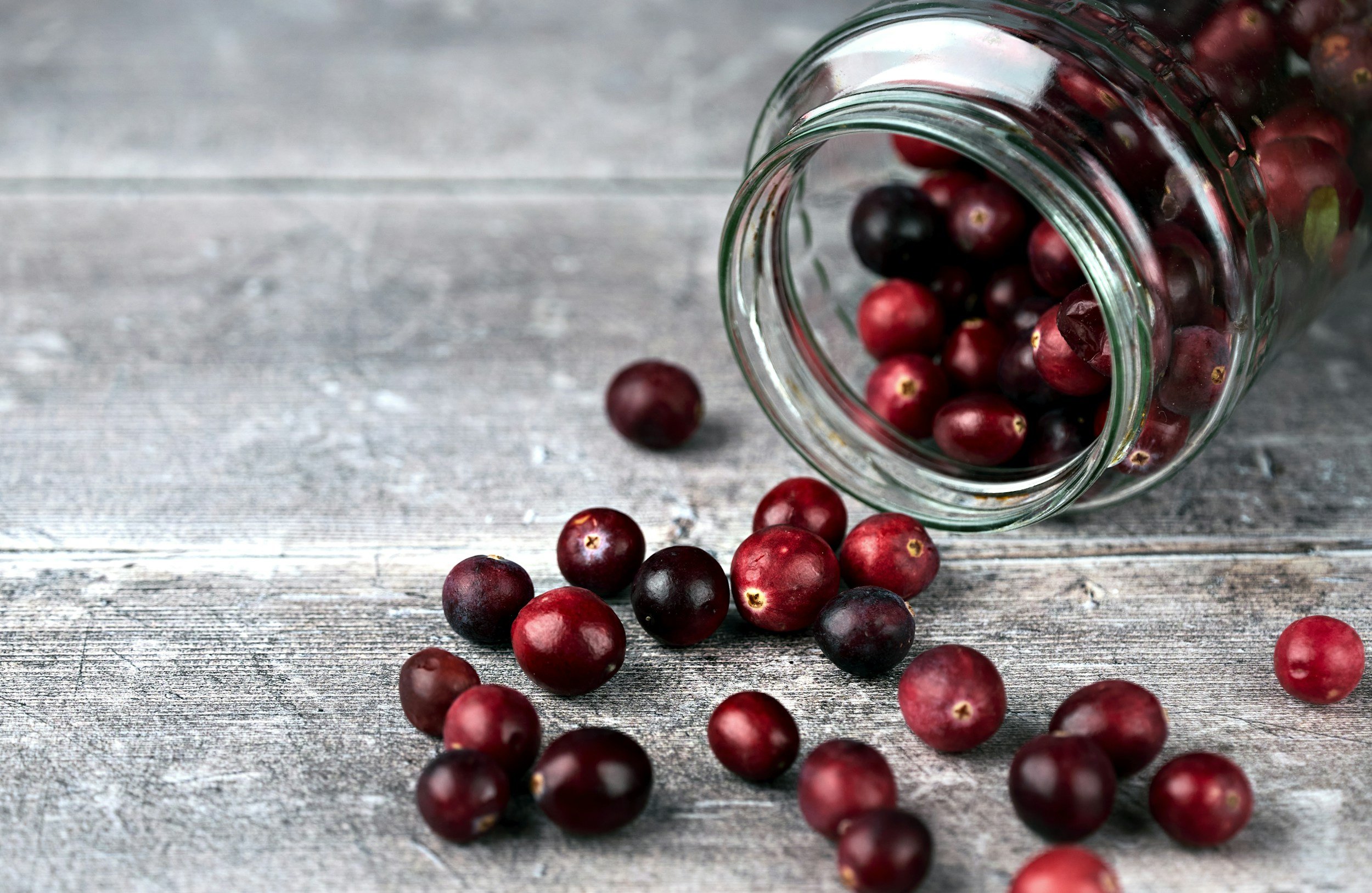
Photo: Rasa Kasparaviciene / Unsplash
What a cranberry actually brings
Every balanced cocktail is a negotiation between strong, sweet, sour, bitter and water. Cranberry shows up to that negotiation carrying three of them.
Acid. Cranberries are one of the most acidic fruits you can buy, with citric, malic and quinic acid all in the mix. That's why raw cranberry juice makes you squint. In a drink, it does lemon's job.
Tannin. That dry, grippy feeling on your gums is the same family of compounds you get from black tea or red wine. It gives a cocktail structure and length, but too much tastes harsh.
Pectin. Cranberries are loaded with it, which is why the sauce sets on its own. In a syrup, a little pectin gives a drink weight and a silky texture.
What cranberries don't bring is sugar. So the trick is simple: when cranberry goes in, other acid comes down, and you decide where the sweetness comes from.
The base: cranberry-rosemary syrup
Combine 1 cup fresh or frozen cranberries, 1 cup sugar and 1 cup water. Simmer about 10 minutes, until the berries burst. Turn off the heat, add two rosemary sprigs, and steep 15 minutes. Strain without pressing hard on the solids (pressing pushes out more tannin and pectin, and the syrup gets cloudy and gluey). Keep it in the fridge for up to a week.
This syrup is sweet and sour at the same time. Every spec below is built around that.
1. Cranberry Rye Sour (shaken)
2 oz rye whiskey
¾ oz cranberry-rosemary syrup
½ oz fresh lemon juice
½ oz egg white (optional)
2 dashes aromatic bitters, on top
A classic sour runs 2 : ¾ : ¾. Here the lemon drops to ½ oz because the syrup is already carrying acid. Keep it at ¾ and the drink goes sharp and thin.
Rye's peppery spice stands up to the tannin where a soft vodka would get pushed around. The egg white isn't just for foam: proteins bind with tannins, so it rounds off the astringency and leaves a velvety finish.
Dry shake (no ice) for 10 seconds to whip the egg white, then shake hard with ice and double strain into a chilled coupe. Dash the bitters across the foam.
2. Cranberry Bitter Spritz (built)
1 oz Italian bitter aperitivo
½ oz cranberry-rosemary syrup
3 oz chilled prosecco
1 oz chilled soda water
Garnish: orange half-wheel and a rosemary sprig
This is a lesson in stacking bitter on bitter. The aperitivo's bitterness and the cranberry's tannin land in the same place on your palate, so they read as one deeper flavor instead of two competing ones. The syrup's acid keeps the whole thing from feeling heavy.
Build it in a wine glass over plenty of ice: aperitivo and syrup first, then prosecco, then soda. Lift gently once with a bar spoon. Bubbles are both texture and brightness, and every extra stir knocks them out.
3. Harvest Manhattan (stirred)
2 oz bourbon
¾ oz sweet vermouth
¼ oz cranberry-rosemary syrup
2 dashes orange bitters
Garnish: orange peel, expressed and discarded, plus three sugared cranberries on a pick
A stirred drink has no citrus to hide behind, so balance comes from small moves. A quarter-ounce of syrup barely changes the sweetness. What it does is add just enough acid to lift the vermouth and a hint of pectin for a rounder mouthfeel. Guests taste "something bright" before they can name it.
Stir with ice for 20 to 30 seconds and strain into a chilled coupe or over one large cube. Why stirred and not shaken? We break that down in our post on shaking vs. stirring.
Sugared cranberries: Toss fresh cranberries in warm simple syrup, lift them out and let them drip, roll in sugar, and let them dry on a rack. Make them in the morning and they'll hold through dinner.
The takeaway
Read every ingredient for what it brings, not what it's called. Cranberry is acid, tannin and texture in a red jacket. Once you see it that way, you can make adjustments to anything: less lemon here, a protein to soften tannin there, a quarter-ounce to brighten a stirred drink without changing its shape.
That's the thinking we bring to our certification class: the why behind every recipe, so you can adjust a drink on the fly, whether you're behind a busy bar or at your own Thanksgiving table. If that's how you want to learn, see our bartending certification classes: 4 days, small classes, inside a real working bar on Market Street.
Happy Thanksgiving from all of us at The Cocktail Camp. Cheers!