
In Person Bartending Classes Near Me
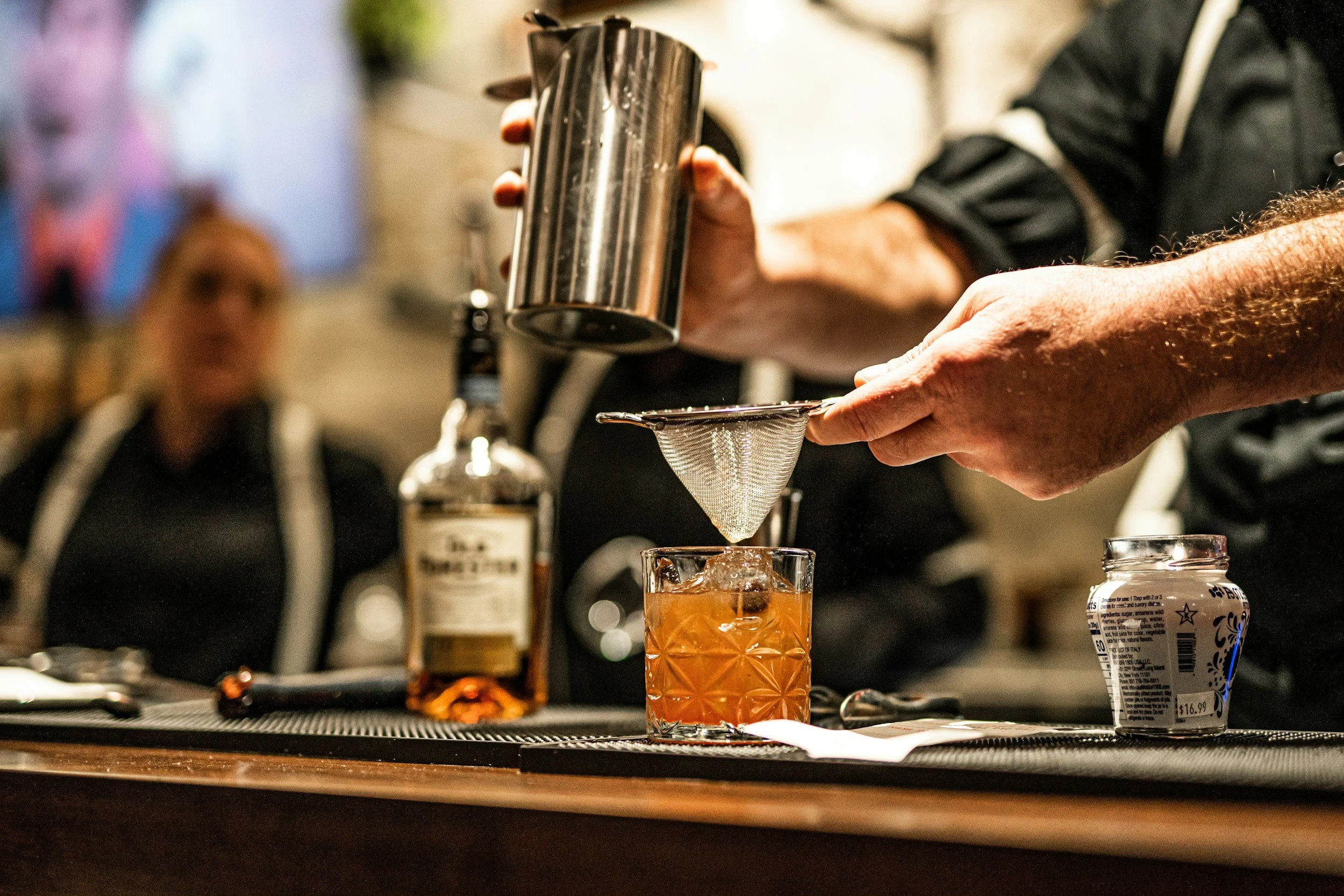
You can tell within five minutes whether a bartending class is worth your time. If you walk into a lecture room with plastic shakers, printed handouts, and no actual bar setup, you are not getting the kind of training that prepares you for a Friday night service. When people search for in person bartending classes near me, what they usually want is simple: real instruction, real equipment, real reps, and real confidence behind the bar.
That matters because bartending is not a theory-first job. It is timing, movement, guest interaction, accuracy, speed, and consistency under pressure. You can read specs for a Margarita or memorize the parts of a Boston shaker, but until you build drinks in a realistic setting, your learning stays abstract. The best in-person training closes that gap fast.
What to look for in in person bartending classes near me
The strongest bartending programs feel more like a working bar than a school desk. That means students are learning station setup, tool handling, pour control, cocktail builds, bar flow, and service habits in an environment that mirrors the job itself. If the space does not resemble where you will actually work, the training may leave you underprepared.
Instructor quality matters just as much as the room. A great bartender is not automatically a great teacher. You want expert instructors who can demonstrate technique clearly, correct mistakes in real time, and explain why one method works better than another. Good instruction shortens the learning curve. Great instruction helps you avoid bad habits before they become hard to fix.
Hands-on repetition should be non-negotiable. Watching a demo has value, but bartending is built on muscle memory. You need reps with jiggers, tins, strainers, glassware, garnish prep, and drink sequencing. The more practice you get in class, the more comfortable you will be when an employer asks you to step behind the bar.
There is also a difference between recreational mixology and career-focused bartending education. Both can be fun and useful, but they serve different goals. If you want a date night or group activity, a lighter cocktail class may be enough. If you want job-ready skills, certification, and a serious foundation, you need a structured training program with professional standards built in.
Why in-person bartending training works better for most beginners
For a lot of students, online learning sounds convenient until they realize what is missing. Bartending is tactile. Grip, balance, shake technique, free pouring, glass handling, and station efficiency are difficult to learn from a screen alone. You can follow along at home, but you cannot replicate the pace, correction, and physical coaching of a live class.
In-person instruction also gives you immediate feedback. If your shake is weak, your posture is off, your pours are inconsistent, or your build order is slowing you down, an instructor can catch it on the spot. That kind of correction saves time and gives students a faster path to confidence.
There is also the energy factor. Training in a real group keeps momentum high. You learn from demos, from your own practice, and from watching others improve. In a hospitality setting, that social pace matters. Bartending is public-facing work, so learning in a dynamic environment can help you get more comfortable with the pressure that comes with it.
That said, in-person classes are not automatically better in every case. If your schedule is unpredictable or you are only looking to sharpen one specific skill, a virtual format can still be useful. But for new bartenders, career changers, and anyone serious about working in bars or events, live hands-on training usually gives better results.
The skills that should be covered
A quality bartending class should teach far more than cocktail recipes. Recipes are the easy part. What separates a serious program from a casual one is whether it teaches the full workflow of the job.
Start with fundamentals. Students should learn bar tools, glassware, classic cocktail families, measuring methods, responsible service habits, and foundational spirits knowledge. Without that base, everything else feels scattered.
Then move into service skills. This includes opening and closing tasks, station organization, order pacing, guest interaction, cash handling awareness, and basic bar professionalism. A bartender is part technician, part host, and part problem-solver. Training should reflect that.
Technique is where in-person learning really proves its value. Stirring properly, shaking with control, building drinks in the correct order, straining cleanly, and garnishing efficiently all affect drink quality and service speed. These are small details that create a big difference during real shifts.
If certification is part of the program, ask what that certificationrepresents. Some credentials focus on course completion, while others are paired with broader responsible beverage service requirements or practical skills outcomes. Neither is wrong, but it helps to know what you are earning and how it supports your goals.
How to choose the right class for your goals
The best class for you depends on what happens after the training. If you want to start applying for bartending jobs soon, choose a program that emphasizes practical skill development and real-bar experience. Employers care about whether you can step into service, stay organized, and make drinks correctly under supervision.
If you already work in hospitality and want to level up, look for a class that sharpens efficiency, cocktail technique, and menu knowledge. The right course can help servers, barbacks, and event staff become stronger candidates for bar roles.
If your goal is more lifestyle-focused, a recreational mixology class may be exactly right. There is real value in learning how to make better drinks at home, host with confidence, and understand spirits more deeply. Just be clear on the difference between a social class and a job-training program so your expectations match the experience.
Location matters too, but not in the lazy sense of picking whatever is closest. When searching for in person bartending classes near me, convenience is helpful, but quality should lead the decision. A slightly longer drive to train in a real bar with expert instructors is often worth it if the outcome is stronger skills and better preparation.
What students in California should prioritize
In markets like San Francisco, Sacramento, and Los Angeles, competition can be strong and service standards can vary by venue. That makes practical training even more valuable. Students in these cities should prioritize programs that understand real hospitality environments, not just textbook bartending.
Look for classes that reflect the pace of urban bar service. High-volume rhythm, clean technique, guest communication, and consistency all matter. A polished cocktail bar and a busy event bar are different environments, but both require confidence, speed, and strong fundamentals.
This is where a real-bar training model stands out. The Cocktail Camp, for example, is built around hands-on instruction in real bar environments, which gives students a more direct path from training to practical application. That kind of setup is especially useful for people who want to feel job-ready, not just course-complete.
Red flags to avoid
Some bartending classes sell the image of bartending without teaching the work. If every message focuses on flair, nightlife, or fast cash, but says little about technique, structure, or instruction, be cautious. Bartending can be social and exciting, but it is still a skilled hospitality job.
Be wary of programs that stay vague about what students actually do in class. If there is no clear mention of hands-on training, bar tools, live practice, or instructor feedback, you may be paying for passive learning. That is rarely enough.
Price can be misleading too. The cheapest option is not always the best value, and the most expensive option is not always the strongest. What matters is how much meaningful practice, expert teaching, and career relevance you get for the investment.
What a strong class should leave you with
By the end of a worthwhile bartending class, you should feel more capable, not just more informed. You should know how to move behind a bar, how to build and serve drinks with consistency, how to use your tools correctly, and how to keep your station under control.
You should also have a clearer sense of fit. Some students leave class ready to pursue bartending professionally. Others realize they enjoy mixology more as a personal skill or social outlet. Both outcomes are useful. Good training does not just teach technique - it helps you understand where you want to take it.
If you are searching for in person bartending classes near me, do not settle for a class that only looks good on a webpage. Choose one that puts you behind a real bar, gives you real reps, and teaches the standards that actually matter once service starts. The right class should make you eager for your first shift, not nervous about whether you learned enough.